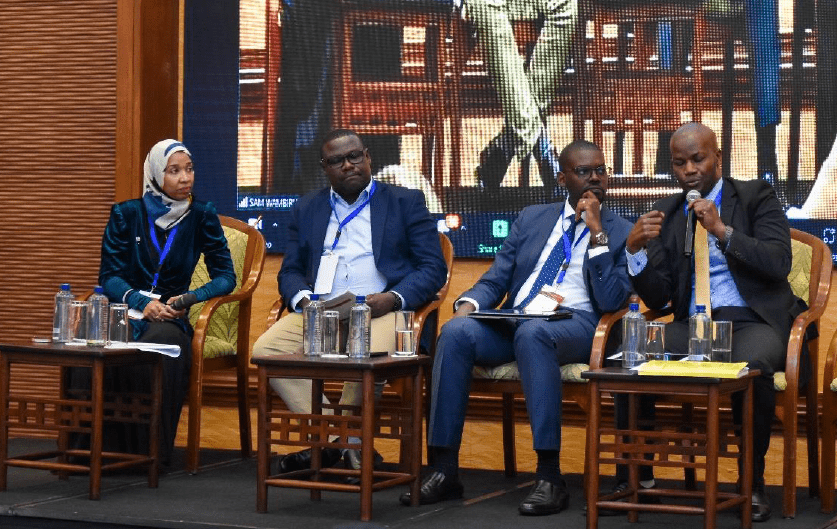
Moderator: Aisha Abdalla
Panellists: Patrick Turinawe, Dr. Maurice Okeyo, CS Robert Mahenia, Dr. Victor Nalule
Introduction: A Continent at a Crossroads
The recent panel discussion, expertly moderated by Aisha Abdalla, explored one of the most pressing questions facing Africa today: Can the continent balance its urgent need for economic growth with the equally critical pursuit of environmental sustainability? Titled “Energy & Disputes: Sustainable Development vs. Energy Transition – The Question for Africa,” the session brought together legal experts, policy leaders, and academics to unpack the tensions, opportunities, and legal complexities surrounding Africa’s energy future.
Abdalla framed the session by highlighting Africa’s position at a pivotal intersection of global climate obligations and regional development ambitions. She noted the growing relevance of arbitration and alternative dispute resolution (ADR) in resolving energy-related disputes, particularly in ensuring fair outcomes that align with the UN Sustainable Development Goals (SDGs).
Understanding Africa’s Legal Landscape in Energy
Patrick Turinawe opened the conversation by shedding light on the legal frameworks governing energy disputes across Africa. He emphasized the dual nature of Africa’s vast natural resource base both as a driver of development and a source of conflict.
Turinawe argued that many energy disputes arise from weak or outdated legal systems, often ill-equipped to handle the complexities of modern energy projects. Using the East African Crude Oil Pipeline (EACOP) as a case study, he illustrated how environmental and community-related concerns have stalled major developments. Turinawe advocated for transparent legal processes and stronger arbitration mechanisms to resolve disputes efficiently and justly.
Sustainable Development and Energy Transition: Conflict or Coexistence?
Dr. Maurice Okeyo tackled the core tension of the session whether sustainable development and energy transition are competing priorities. He proposed a more integrated view, asserting that sustainability must underpin energy sector growth.
Dr. Okeyo presented real-world examples such as the Lake Turkana Wind Power project in Kenya to demonstrate how clean energy initiatives can yield both environmental and socio-economic benefits. He called for increased investment in renewable energy and policy incentives that encourage green innovation across the continent.
Policy and Governance: The Implementation Gap
CS Robert Mahenia delved into the policy and governance barriers slowing Africa’s energy transition. Despite the existence of progressive policies and ambitious renewable targets, many African nations struggle with implementation due to bureaucracy, lack of expertise, and funding challenges.
Mahenia advocated for the harmonization of energy policies at the regional level to foster an integrated continental energy market. He highlighted the role of international partnerships and public-private partnerships (PPPs) in bridging the resource gap and driving large-scale infrastructure projects.
Arbitration and ADR: Tools for a Just Transition
Dr. Victor Nalule turned the spotlight on arbitration and ADR mechanisms as crucial tools in navigating complex energy disputes. He emphasized the advantages of arbitration confidentiality, flexibility, and subject-matter expertise particularly in cross-border energy projects involving diverse stakeholders.
However, Dr. Nalule also acknowledged challenges, including the high costs of arbitration and the need to build capacity among African legal professionals. He stressed the importance of developing homegrown expertise in energy law and dispute resolution.
Interactive Dialogue: Community, Technology, and Inclusion
The panel discussion sparked dynamic engagement with the audience. A key theme was the importance of involving local communities in energy planning and development. Dr. Okeyo responded by advocating for participatory governance that ensures local voices are not only heard but are central to project design and execution.
Another interesting question centered on the use of emerging technologies, such as blockchain, in energy project management. Dr. Nalule acknowledged blockchain’s potential to enhance transparency and accountability but cautioned that without sound legal and regulatory frameworks, technology alone is not a silver bullet.
Conclusion: Toward an Integrated Futur
In her closing remarks, Aisha Abdalla emphasized the need for Africa to adopt a holistic, integrated approach to energy development one that balances economic growth with environmental stewardship and social equity. She reiterated the centrality of legal tools like arbitration and ADR in managing disputes and supporting a just and sustainable energy transition.
The panel concluded with a shared vision: Africa has the potential not only to catch up with the global energy transition but to lead it provided that the right policies, investments, and legal frameworks are put in place.
Key Takeaways
- Robust legal and regulatory frameworks are critical to managing Africa’s energy disputes.
- Sustainable development and energy transition are not mutually exclusive; they can and must be pursued together.
- Community participation and transparent governance are essential to minimizing conflict and maximizing benefits.
- Arbitration and ADR offer effective solutions for managing complex, multi-stakeholder energy disputes.
- Africa must leverage technology, partnerships, and regional integration to build a resilient, inclusive energy future.