Hon. Prof. Kariuki Muigua, OGW, C.Arb Gives Out 32 Books to CIArb Kenya and the World
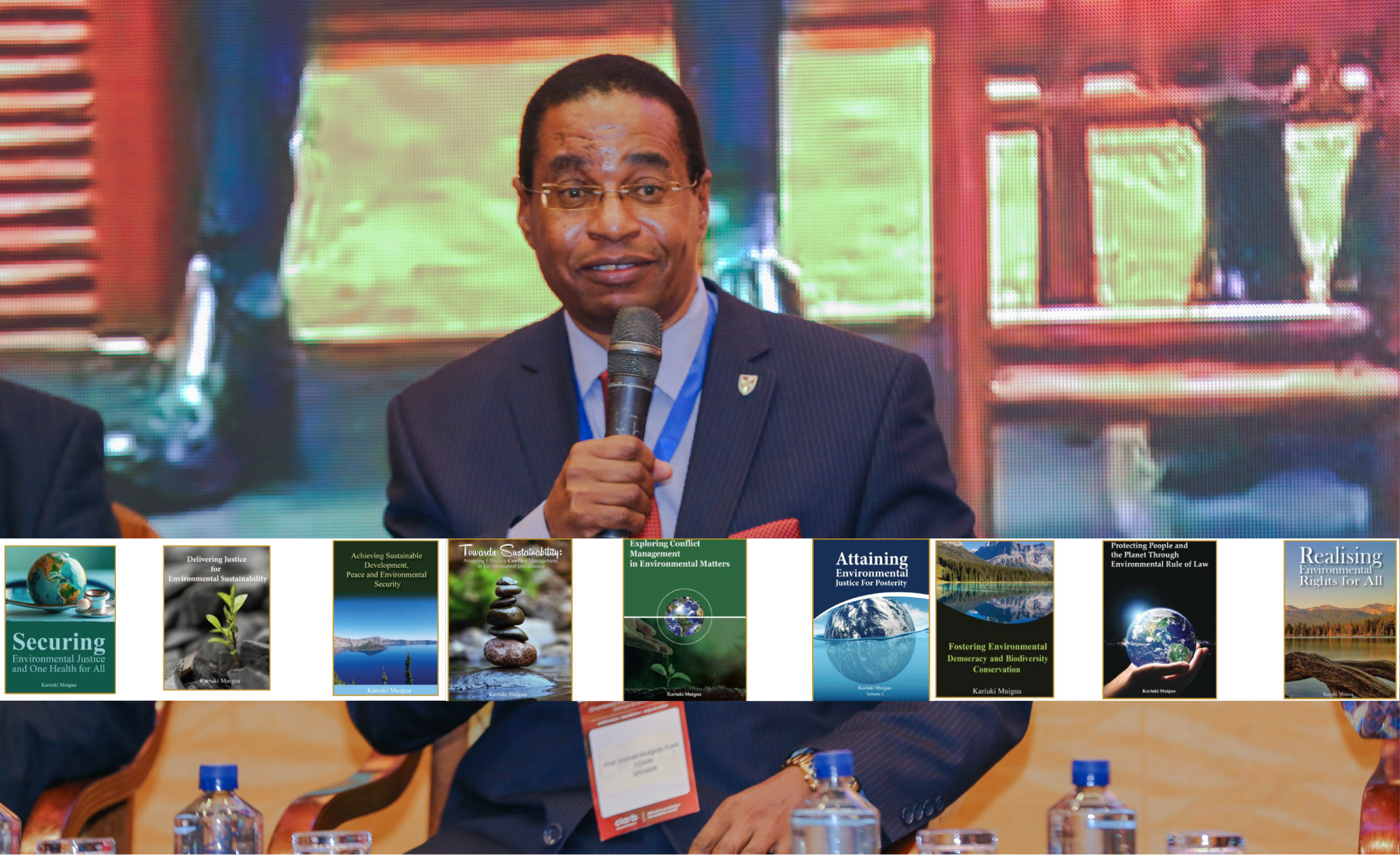
The Pillars of Environmental Democracy: A Guide to Hon. Prof. Kariuki Muigua’s Essential Works
Long gone are the days when it was fashionable to claim that “if you want to hide something from an African, put it in a book.” With thought leaders and authors such as Hon. Prof. Kariuki Muigua,OGW, C.Arb who prioritize knowledge over profit, this narrative is rapidly fading. Today, access to transformative scholarship is literally just a click away—empowering Africans to read more, learn more, and lead more.
Prof. Muigua’s commitment to free knowledge-sharing has opened doors for students, practitioners, policymakers, and communities to engage deeply with issues in Environmental Democracy, ADR, ESG, Environmental Justice, One Health, and sustainable development. His works are now available for free download, strengthening reading culture and building capacity across the continent.
This article highlights the key pillars of Environmental Democracy reflected in Prof. Muigua’s essential publications—each contributing to a more participatory, just, and sustainable Africa.
1. Environmental Democracy in Practice
Fostering Environmental Democracy and Biodiversity Conservation
This book champions the right to know, participate, and seek justice as core elements of inclusive environmental governance. It underscores the role of public engagement and transparency in protecting biodiversity and building accountability.
2. Rule of Law for Environmental Justice
Protecting People and the Planet Through Environmental Rule of Law
Here, Prof. Muigua positions the rule of law as the anchor of effective environmental governance. He emphasizes enforcement, transparency, and accessible justice systems as the foundation of environmental protection.
3. Public Participation & Governance
Delivering Justice for Environmental Sustainability
This work explores how justice-centered governance can harmonize economic development with environmental protection. It advocates for participatory structures that empower communities and support sustainable resource management.
4. Rights-Based Environmental Governance
Realising Environmental Justice for All
Prof. Muigua operationalizes the right to a clean, healthy, and sustainable environment within Kenya’s constitutional framework. The book calls for stronger institutions and robust rights-based approaches to environmental protection.
5. Inclusive Decision-Making
Securing Environmental Justice and One Health for All
This publication integrates human, animal, and ecosystem health within a unified One Health justice framework. It argues for equitable decision-making and meaningful community participation to achieve shared well-being.
6. Conflict Resolution & Participation
Exploring Conflict Management in Environmental Matters
Focusing on ADR and traditional conflict management, this book analyzes the resolution of land, water, and natural resource disputes. It promotes culturally sensitive, participatory approaches to environmental peacebuilding.
7. Intergenerational Equity & Public Voice
Attaining Environmental Justice for Posterity
Prof. Muigua emphasizes the importance of safeguarding environmental resources for future generations. The book discusses procedural and distributive justice across time, highlighting policy choices that protect long-term sustainability.
8. Sustainable Governance Through ADR
Towards Sustainability: Attaining Effective Conflict Management in Environmental Governance
This text explores mediation, ADR, and “green arbitration” as tools for resolving complex environmental disputes. It promotes dispute resolution mechanisms that are sustainable, fair, and attuned to ecological realities.
9. Peace, Security & Public Engagement
Achieving Sustainable Development, Peace and Environmental Security
Linking environmental integrity with peacebuilding, this book examines how environmental governance, equity, and security intersect. It provides strategies for resilience in resource-stressed and conflict-prone regions.
Free Access to Knowledge
All these publications are available for free download, reflecting Prof. Muigua’s belief that knowledge must be accessible to all in order to transform societies.
Prof. Kariuki Muigua’s body of work continues to shape discourse in Environmental Democracy and sustainable governance not only in Kenya, but across Africa and beyond. By making these resources freely available, he invites all of us to learn, engage, and participate in building a more just and sustainable world.
CIArb Kenya Branch Chairman FCS Jaqueline Waihenya expresses her deepest gratitude to all the valued partners, fellows, and members who attended the significant event of celebrating 40 Years of Excellence
Are you interested in understanding how disputes are resolved outside traditional court proceedings? Would you like to explore a professional career in arbitration, mediation or other forms of Alternative Dispute
Africa Decides: Sovereignty, Innovation & the Future of Dispute Resolution 5–9 October 2026 | Diamond Leisure Lodge, Diani, Kenya Conference Overview The TAKUKA Conference 2026 is a landmark Pan-African gathering
Sometimes, professional partnerships feel less like partnerships and more like family. That was certainly the spirit of today’s engagement between FIDA Kenya and Ciarb Kenya, where two organisations united by