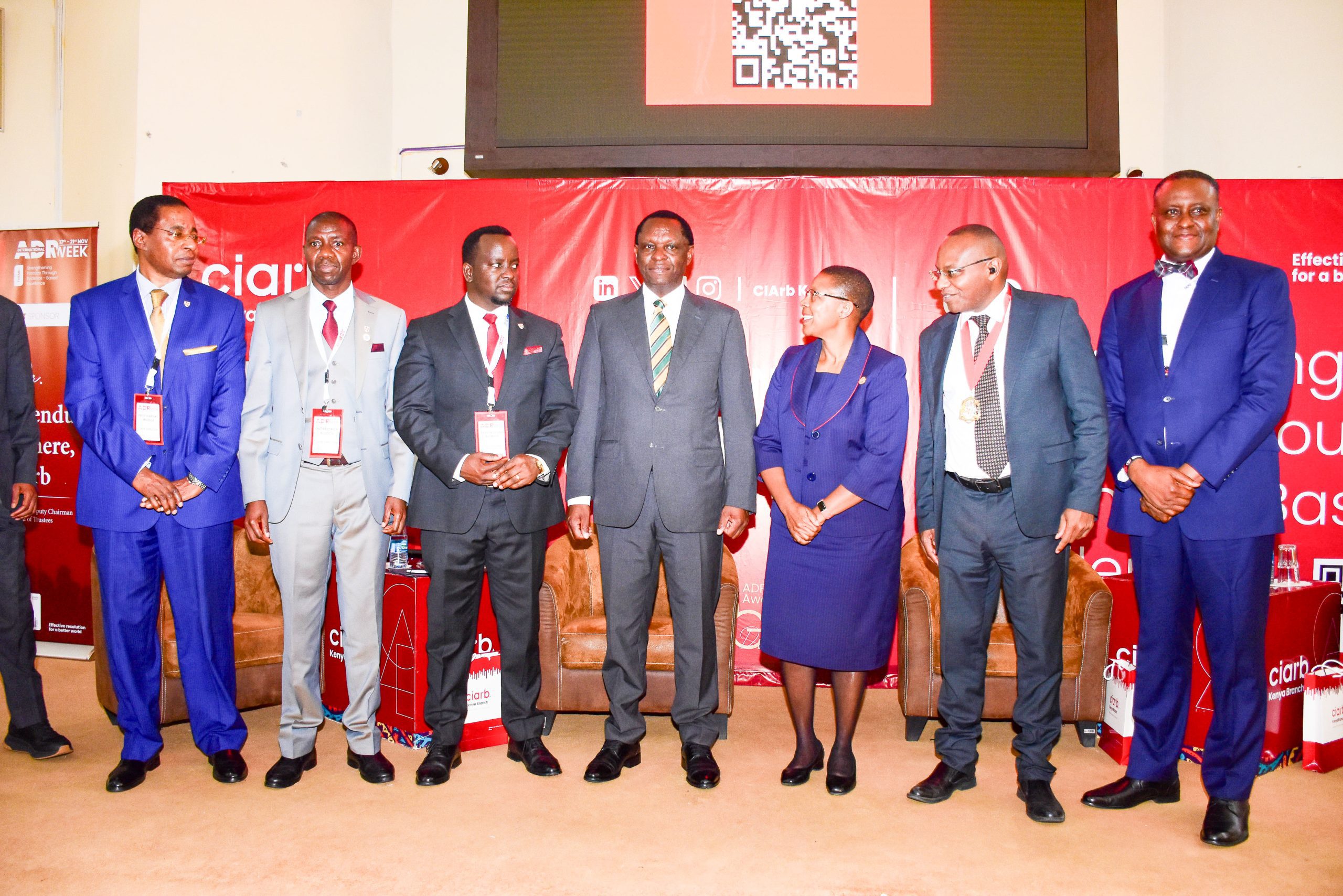
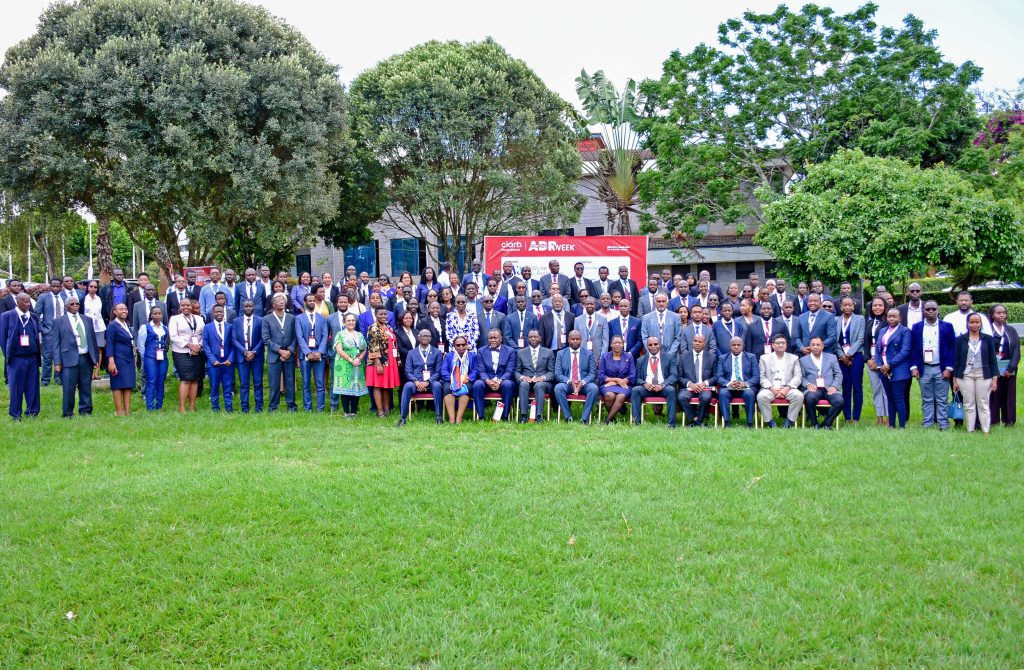
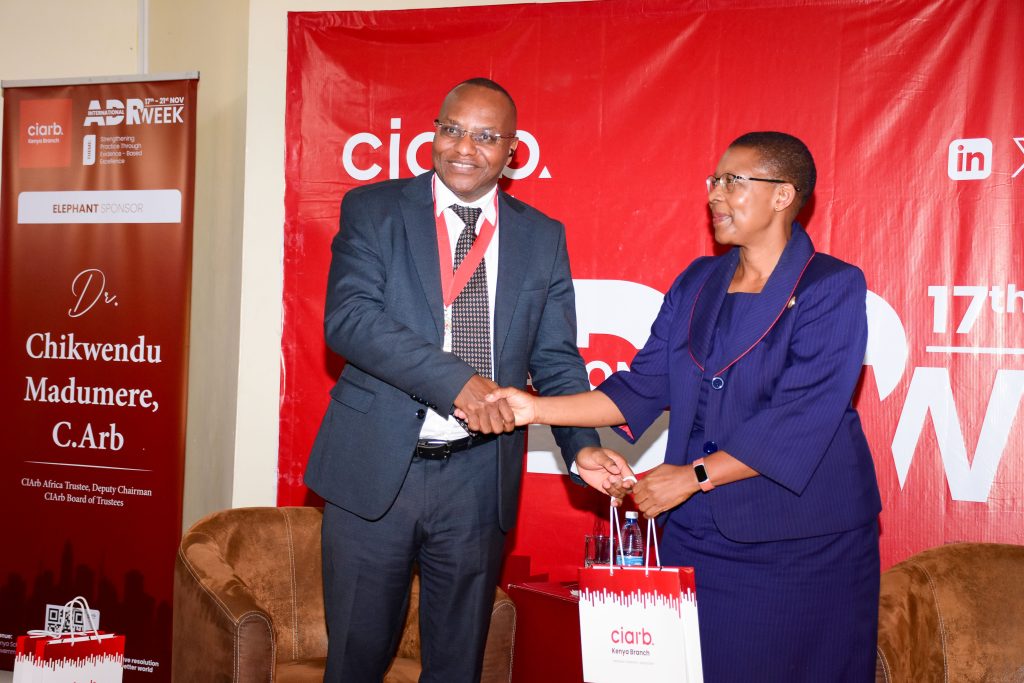
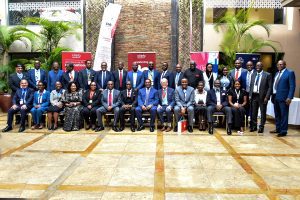
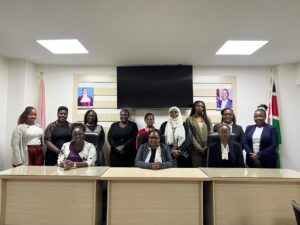
The keynote session of the International ADR Week 2025 was opened by Eng. Howard M’mayi, who served as the Master of Ceremonies. He warmly welcomed all dignitaries in attendance, including the Attorney General, Hon. Dorcas Oduor, OGW, EBS, SC; Mr. Chikwendu Madumere, CIArb Africa Trustee; the Principal Secretary, Ministry of Cooperatives & MSME Development, Mr. Patrick Kilemi; and Mr. Kennedy Ogeto, Legal Advisor, Executive Office of the President and former Solicitor General.
1. Opening Remarks – Vice Chairman, CIArb Kenya
Ladies and gentlemen, I welcome you to the Kenya School of Government and to the International ADR Week 2025. This year, we have curated a rich programme that spans five days, each with a unique theme designed to provoke thought and advance practice in dispute resolution. Our week includes the much-anticipated Gala Dinner and Awards Ceremony. It is now my pleasure to invite the Chairman of CIArb Kenya to give his remarks. I am proud to highlight that our Chairman not only holds the title of ADR Practitioner of the Year from the Nairobi Legal Awards but was also recently crowned Arbitration Practitioner of the Year at the Africa Arbitration Awards. We are honoured to have such leadership guiding the branch.
It is now my pleasure to invite the Chairman of CIArb Kenya to give his remarks.
2. Remarks by the Chairman, CIArb Kenya
Distinguished guests, colleagues, ladies and gentlemen, I begin by recognizing all the dignitaries present with us today. ADR Week stands out because it brings together users, practitioners, and regulators of dispute resolution processes. Unlike many conferences where professionals merely ‘speak to themselves,’ we have intentionally created a space where diverse voices converge. This year marks a milestone: we have brought all ADR mechanisms into a single national conversation. This approach aligns with the Chief Justice’s call for a multi-door approach to justice and the integration of technology in dispute resolution. We must prioritise authorship and documentation. These shape policy, influence jurisprudence, and build institutional memory. Tomorrow, on Day 2, we will launch several publications authored by respected members of our community—Justice O.A. Angote, FCS Jacqueline Waihenya, Prof. Kariuki Muigua, and David Onsare. ADR must not remain confined in Nairobi. I am pleased to share that this evening, we shall officially launch three new ADR Centres—in the Western Region, Coastal Region, and Central Region. These centres will make dispute resolution more accessible across the country. Finally, I invite all of you to the Gala Dinner and Awards Ceremony, where we shall celebrate excellence in ADR. Kindly come adorned in Maasai regalia as part of the festivities.
3. Remarks by Mr. Kennedy Ogeto
Ladies and gentlemen, I acknowledge the distinguished guests present today, including my former teacher Justice Ringera. I apologise in advance should anything be amiss in my remarks. I also recognise the Judges of the Court of Appeal here with us—Hon. Justice Walter and Hon. Justice Mary Kasango—and the Attorney General. I stand here on behalf of the Chief of Staff and Head of Public Service, Mr. Felix Koskei, to convey his warm greetings and apologies for being unable to join us due to official engagements. Permit me now to deliver his speech.”
4. Speech by Mr. Felix Koskei, Head of Public Service (Delivered by Mr. Ogeto)
I commend CIArb Kenya for organizing the International ADR Week 2025, a vital platform for policymakers, academics, judicial officers, practitioners, and students to reconsider the evolving role of ADR in Kenya and around the world. Kenya’s Constitution, particularly Article 159(2)(c) and Article 189(4), anchors ADR firmly within our justice framework. Government agencies have increasingly adopted mediation, resolving disputes worth more than KES 2 billion over the past two years—including significant tax disputes involving KRA. I encourage CIArb Kenya to collect data and evidence on the outcomes of mediation across government institutions. The theme of this year’s ADR Week—Strengthening Practice Through Evidence-Based Excellence—is both timely and necessary.
While litigation has well-defined evidentiary standards, ADR continues to grapple with inconsistencies in thresholds of evidence, transparency, and predictability. These gaps can lead to increased judicial intervention. Examples of these include; NCPB v. Errad Supplies & General Contractors Ltd, where the Court of Appeal set aside a High Court judgment due to issues related to public policy and alleged document forgery and NHIF v. Baseline Architects, where similar concerns led to the setting aside of an arbitral award. Practitioners must work to define standards for handling evidence within ADR, guided by policy and regulatory clarity.
Allow me to quote Abraham Lincoln who said;
“Discourage litigation. Persuade your neighbours to compromise whenever you can. Point out to them how the nominal winner is often a real loser – in fees, expenses, and waste of time. As a peacemaker the lawyer has a superior opportunity of being a good man. There will still be business enough”
We must strengthen training, build structured capacity-development programmes, and evaluate practitioners’ competencies—especially regarding evidence-handling and emerging technologies. Technology also presents immense potential for ADR, but it also introduces risks such as; digital inequalities, data privacy concerns, and algorithmic bias. We must innovate responsibly.
I call upon the judiciary, policymakers, practitioners, and academics to build a resilient, evidence-driven ADR ecosystem. And to the lawyers: fear not, there will still be business. Let us simply avoid taking up matters we should not.”
6. Remarks by Mr. Chikwendu Madumere (CIArb Africa Trustee)
The theme of this conference is crucial in positioning Kenya within the regional and global arbitration space.A thriving arbitration ecosystem rests on three pillars. The first being the arbitrators, who must uphold excellence, ethics, and continuous learning, supported by institutions like CIArb Kenya.The second pillar is the courts; which shape jurisprudence on enforcement and setting aside of awards. I applaud the six Judges who recently joined the CIArb Fellowship. The third pillar is the government; which provides the enabling environment necessary for arbitration to flourish.Kenya’s bid to host the Global CIArb Conference shows its growing influence and leadership.
7. Remarks by the Attorney General
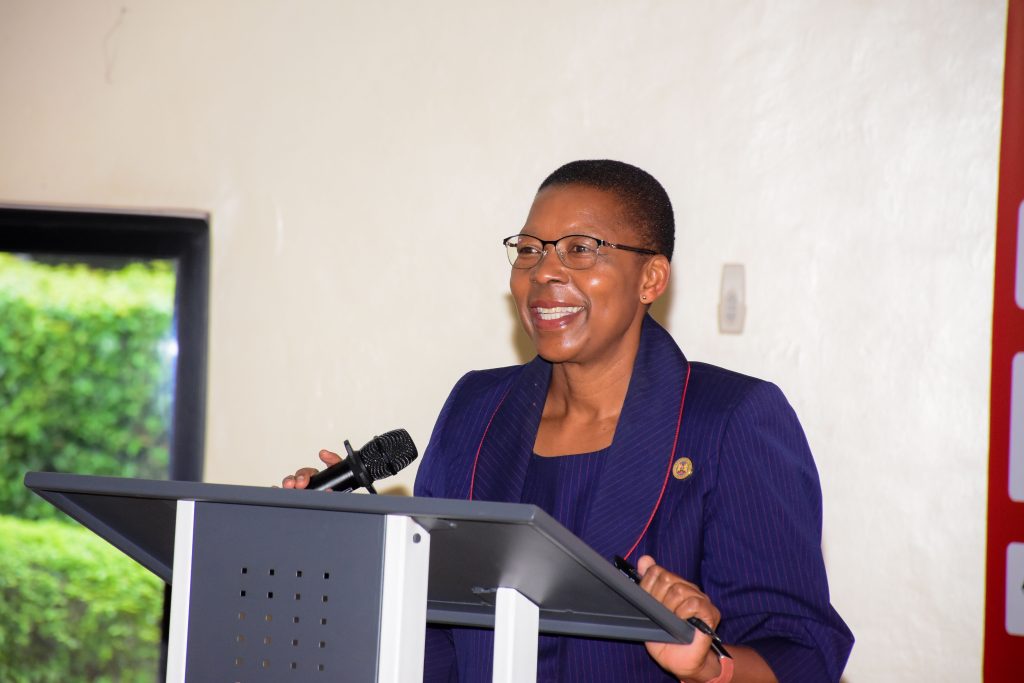
I begin by acknowledging my teachers—Justice Kasango and Justice Ringera—and I thank you all for the opportunity to speak on positioning Kenya as a regional arbitration hub. ADR is no longer auxiliary; it is essential. Our Constitution, through Article 159(2)(c), firmly embeds mediation and arbitration within Kenya’s justice system. Countries that thrive in cross-border investment rely on strong arbitration frameworks characterised by predictability, commercial sensitivity, cost efficiency, and institutional trust. I applaud Kenya’s judiciary for its reforms on arbitration fees and I reaffirm the government’s commitment to strengthening the Nairobi Centre for International Arbitration (NCIA). We are establishing technology hubs to digitize justice processes, and I encourage the ADR sector to embrace innovation.
As we continue strengthening our justice system, I wish to highlight several initiatives that reflect our commitment to efficiency, accessibility, and innovation.
First, through the Critical Litigation Committee, we have begun flagging matters that are better resolved outside the courtroom. This active engagement with litigants and institutions aligns with our broader vision of positioning Kenya as a premier arbitration hub for East Africa and the continent. To achieve this, we must continue investing in capacity building—particularly in emerging areas such as energy, intellectual property, and climate-related disputes. Our efforts are already taking shape through judicial mobilisation and increased awareness among key stakeholders.
We are also advancing our people-centred initiative. Through the National Legal Aid Services, we are supporting self-represented litigants and expanding access through virtual hearings. This initiative is backed by a 24-hour call centre designed to assist the public in matters relating to land, probate and administration, and children in conflict with the law. Tomorrow, the 18th of November, we will launch new legal aid centres across the country. These centres will play a critical role in preventing disputes from escalating unnecessarily.
At this ADR Week, I issue a call to action: let us remember that efficiency builds confidence, and confidence fuels growth. Our justice mechanisms must work for both domestic and international users if we are to maintain Kenya’s place in the global dispute resolution landscape. Within the Alternative Justice System, (AJS) we are exploring how best to manage criminal matters, though concerns remain regarding the extent to which criminal law should be channelled through AJS, given that the Constitution already prescribes a clear framework for handling such cases.
We are also embracing technology, but we must confront its legal implications—particularly with respect to electronic evidence, computer-generated records, and the growing use of AI. These developments demand thoughtful regulation. Through the innovation hub under the Office of the Attorney General, we have begun addressing these issues in a structured way. All these efforts reflect our broader goal: to consolidate Nairobi and Kenya as a regional arbitration hub. For this, I remain deeply grateful for the partnership and expertise of stakeholders such as CIArb Kenya
As the Vice Chairman reminded us through Article 48, access to justice is a collective responsibility. We cannot operationalise legal aid without institutions such as the LSK, CIArb Kenya, and other professional bodies. I therefore invite CIArb Kenya to consider how it can support Legal Aid Clinics and promote affordable pathways to justice, including mediation and other ADR mechanisms.
With these remarks, I am honoured to declare the Conference open. I now hand over to the Master of Ceremonies, Eng. Howard.
8. Conclusion
The keynote session set the tone for ADR Week by underscoring the importance of evidence, technology, capacity building, multi-sectoral collaboration, and policy reform.
The Attorney General formally declared the Conference open.
CIArb Kenya Branch Chairman FCS Jaqueline Waihenya expresses her deepest gratitude to all the valued partners, fellows, and members who attended the significant event of celebrating 40 Years of Excellence
Are you interested in understanding how disputes are resolved outside traditional court proceedings? Would you like to explore a professional career in arbitration, mediation or other forms of Alternative Dispute
Africa Decides: Sovereignty, Innovation & the Future of Dispute Resolution 5–9 October 2026 | Diamond Leisure Lodge, Diani, Kenya Conference Overview The TAKUKA Conference 2026 is a landmark Pan-African gathering
Sometimes, professional partnerships feel less like partnerships and more like family. That was certainly the spirit of today’s engagement between FIDA Kenya and Ciarb Kenya, where two organisations united by