Godwin Omoaka, SAN, FCIArb – Partner, Dispute Resolution Group at Templars
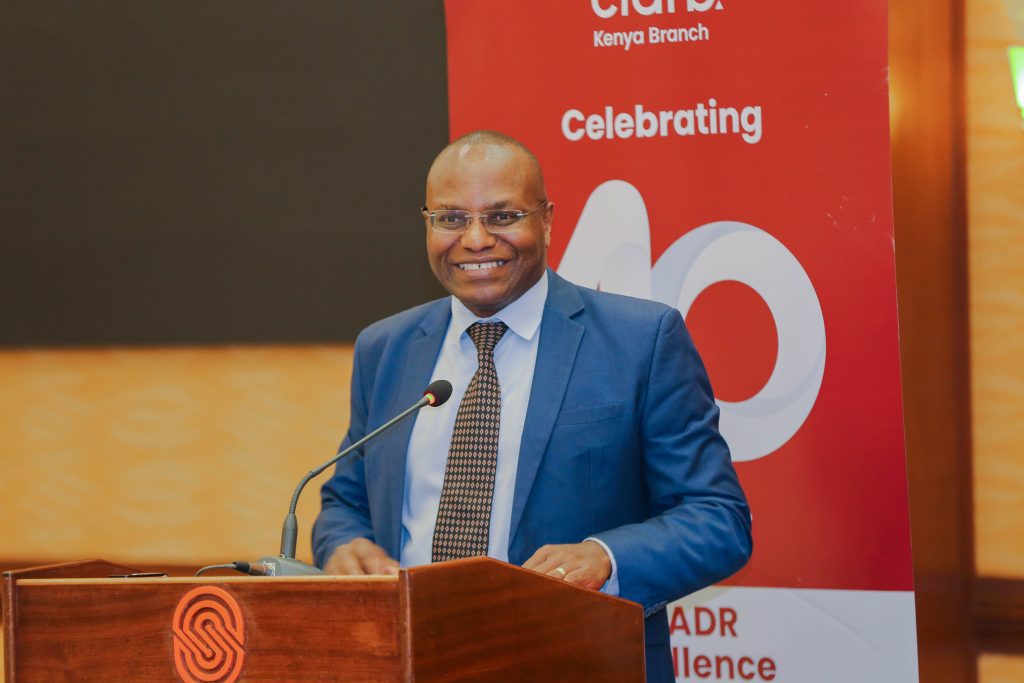
Prof Kenneth Wyne Mutuma C. Arb FCIArb – Chair, Ciarb Kenya Branch
Nikhil Desai, FCIArb – Managing Director, J. Miles & Co.
Caselaw Referenced
World Duty Free Company Limited v. Republic of Kenya (ICSID Case No. ARB/00/7)
Process & Industrial Developments Limited (P&ID) v. The Federal Republic of Nigeria
Fiona Trust & Holding Corporation v. Privalov [2007] UKHL 40, [2007] 4 All ER 951
Overview
The webinar explored the shifts in Africa’s investment arbitration framework, with a focus on the redesign of bilateral investment treaties (BITs), the role of the AfCFTA Investment Protocol, the challenges posed by corruption and jurisdictional disputes, and the continent’s positioning as a credible seat for arbitration.
1. Evolution of Investment Arbitration in Africa
Prof Kenneth Wyne Mutuma began by noting that Africa has become a growing destination for investment, particularly from Arab states. He emphasized that the continent is presenting itself as both a neutral forum for dispute resolution and a pro-investment environment. In the East African region, he highlighted Nairobi as an increasingly attractive hub for investment arbitration.
Godwin Omoaka, SAN added that the landscape of arbitration in Africa has undergone significant evolution due to the rise of African-centered arbitral institutions and the push for a more harmonized framework under AfCFTA. According to him, African states are keen on renegotiating BITs to reflect a shift in policy, moving away from purely investor-focused protections to more balanced arrangements.
While Nikhil Desai provided historical context, explaining that a majority of the BITs were negotiated when African states were primarily concerned with attracting foreign investments. He observed that intra-African BITs, such as those between Morocco and Nigeria, have become more common. He also highlighted the growing trend of requiring arbitration seats to be located in Africa, while stressing that more Africans need to be appointed as arbitrators.
Nikhil Desai noted that African states have already began the process, with about 50 African states have signed the ICSID agreement, leaving only; Ethiopia, Guinea-Bissau, and Namibia, that have yet to ratify. To begin with, he explains the need for BITs to include a provision stating that the applicable law is that of the host state. He highlighted World Duty Free Company Limited v. Republic of Kenya decision, which defined “investment” without requiring compliance with domestic law, creating tensions between tribunal interpretations and national policy.
He also expounded on the introduction of the Fair and Equitable treatment provision that has been interpreted by tribunals in different ways, creating tensions between tribunal interpretations and national policy Instead, there ought to be a criterion under which the provision is interpreted instead of leaving it to the discretion of tribunals.
Godwin Omoaka expanded on the inclusion of ESG provisions in newer treaties, observing that Environmental Social Governance clauses represent a major shift from older-generation treaties. These provisions, which impose obligations on investors, allow states to pursue claims against investors for social or environmental harm. He compared this to Spain’s experience under the Energy Charter Treaty, where attempts to shift toward renewable energy clause in their BITs triggered a flood of claims.
Additionally, Nikhil Desai pointed to South Africa’s drastic decision to exit certain BITs, driven by geopolitical concerns, and Tanzania’s legislative reforms restricting international arbitration over natural resources after costly disputes, including the attachment of Air Tanzania assets. Although Tanzania has since moderated this position with a new arbitration act, he argued that the broader trend reflects states reclaiming sovereignty over resources.
3. The AfCFTA Investment Protocol
Godwin Omoaka stressed that the Investment Protocol addresses the longstanding fragmentation among African states by prioritizing domestic remedies over immediate arbitration. He explained that the protocol also integrates obligations related to environment, health, and sustainable development goals, thereby shifting toward a more holistic investment regime, gradually moving towards the sustainable development goals (SDG 2030). He also highlighted that this represented the Africanization of arbitration, pointing to the stark imbalance at ICSID: although Africa accounts for roughly 30% of claims, only 5% of appointed arbitrators are African, according to the ICSID 2024 Annual Report. He underlined that no ICSID panel has ever had a majority of African arbitrators. He concludes that strengthening African arbitral institutions such as Ciarb Kenya Branch will be essential to retaining disputes within Africa and ensuring credibility.
Nikhil Desai expounded on how to position Africa as a seat of arbitration, that while the value of disputes is high, awards are often decided outside the continent with little consideration of their economic impact. He noted that domestic institutions such as NCIA, KIAC, and CIArb Kenya Branch are working to showcase credibility by aligning with international best practices. He also pointed to the role of ICSID’s regional offices in ensuring that local firms increasingly act as principal representatives.
4. Major Challenges in Investment Arbitration in Africa
Corruption
Nikhil Desai began by citing the P&ID case in Nigeria, where a tribunal awarded $11 billion to an investor under a gas concession BIT agreement, only for the government to challenge the award in London on the basis that the contract had been procured through bribery. He explained that tribunals have treated such defenses cautiously, sometimes damages computation or requiring states to cover their own costs.
Godwin Omoaka added that while corruption is a global issue, its prevalence poses a major challenge and undermines Africa’s attractiveness as an arbitration hub. He emphasized that African states should rely on their domestic legal frameworks to prevent and curb corruption. He noted that arbitral tribunals must be cautious when corruption is raised, as large claims can severely impact a country’s GDP.
Jurisdictional challenges in enforcing arbitral awards
Nikhil Desai noted that tribunals often assess the closeness between state corporations and governments to determine liability. He referred to Fiona Trust & Holding Corporation v. Privalov, where the state could be held responsible if a corporation was shown to act as its alter ego. He also noted that enforcement becomes difficult where the state corporations lack assets outside the jurisdiction.
The double-edged sword of third-party funding
Prof. Kenneth Mutuma explained that it can help states pursue strong claims without financial strain. However, it raises concerns over control of proceedings and representation. He observed that Africa has yet to see major use of third-party funding, though insurance industries are beginning to explore related mechanisms.
Godwin Omoaka added that the ICSID framework is often skewed against African states, with the P&ID case highlighting the lack of transparency around funding arrangements. He stressed the importance of requiring disclosure of third-party funding to avoid conflicts of interest.
Prof. Kenneth Mutuma closed by observing that while BITs were historically about protecting private investments, states are now more conscious of public policy concerns. He warned that the Nigerian P&ID case illustrated the risks of ignoring these issues, as Nigeria almost lost a third of its foreign reserves.
QUESTIONS FROM THE AUDIENCE
1. How does the AfCFTA protocol, which seeks to terminate all intra-African BITs through a single rulebook, align with the fact that African countries still maintain old-generation BITs with non-African states? Doesn’t this weaken Africa’s pursuit of sovereignty in investment arbitration?
Godwin Omoaka explained that the protocol provides a five-year period for the expiration of intra-African BITs, while allowing a 20-year window for claims to be brought under sunset clauses. However, this does not apply to treaties under the ICSID framework. The overall aim, he said, is to remodel existing BITs to better fit Africa’s needs.
Nikhil Desai added that the real challenge lies in ensuring all African states adopt a unified approach, especially for treaties concluded under other international frameworks.
Evelyn, Acting CEO, Ciarb Kenya, noted that the Africa Arbitration Academy, in 2022, developed a model BIT for African states to address challenges with first-generation treaties and to promote coherence across the continent.
2. Why do arbitrations under BITs and ICSID still sit outside Africa despite the continent attracting major investment flows, and how do governance failures and corruption further weaken Africa’s credibility as a seat of arbitration?
Panelists acknowledged that the perception of Africa lacking capacity undermines its credibility. This perception discourages practitioners from pursuing cross-border collaboration and is compounded by language divisions between Anglophone and Francophone states, which reduce the visibility of African arbitrators.
Godwin Omoaka described this as “psychological brainwashing,” with Africans made to feel unqualified despite having the expertise. He highlighted that the ICSID 2025 report showed only six Nigerians had been appointed to arbitral tribunals, even though Nigeria has many reputable arbitrators. He stressed that ICSID was originally designed to safeguard investor interests rather than state sovereignty.
On corruption, panelists noted that while safeguards exist in treaties to prevent abuse, enforcement is weak. Corruption continues to erode investor confidence, divert investment capital, and undermine Africa’s ability to establish itself as a reliable arbitration hub
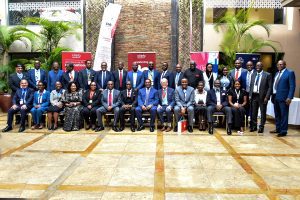
CIArb Kenya Branch Chairman FCS Jaqueline Waihenya expresses her deepest gratitude to all the valued partners, fellows, and members who attended the significant event of celebrating 40 Years of Excellence
Are you interested in understanding how disputes are resolved outside traditional court proceedings? Would you like to explore a professional career in arbitration, mediation or other forms of Alternative Dispute
Africa Decides: Sovereignty, Innovation & the Future of Dispute Resolution 5–9 October 2026 | Diamond Leisure Lodge, Diani, Kenya Conference Overview The TAKUKA Conference 2026 is a landmark Pan-African gathering
Sometimes, professional partnerships feel less like partnerships and more like family. That was certainly the spirit of today’s engagement between FIDA Kenya and Ciarb Kenya, where two organisations united by