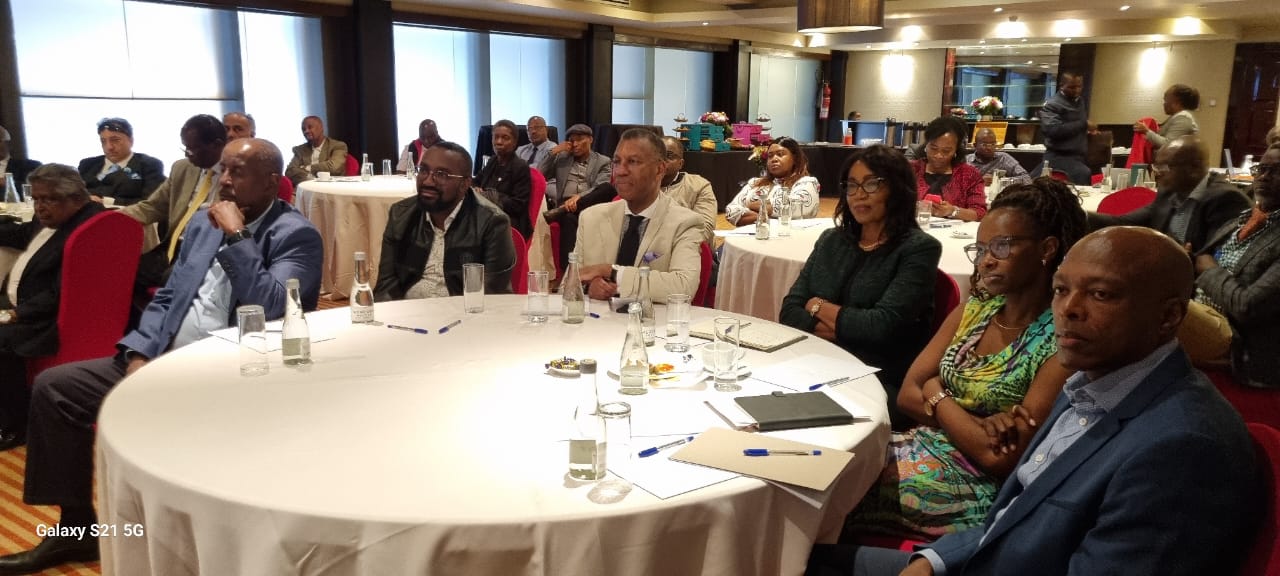
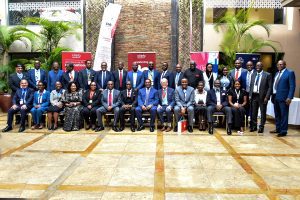
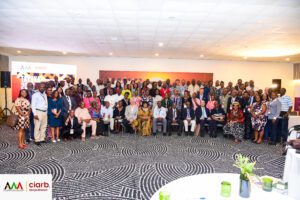
The 3rd Peers Lounge unfolded as a resounding success, drawing nearly 50 esteemed Fellows and Chartered Arbitrators into its vibrant discussion space. Setting the tone for the gathering, Jacqueline Waihenya, a Chartered Arbitrator and CIArb Chairperson, extended a warm welcome to Peers. With insightful anecdotes, she delved into the prevailing trends, particularly highlighting the tangible impacts of the escalating costs associated with Arbitration.
Guiding the day’s discussions, the Moderator, Jackie Oyuyo Githinji, a Chartered Arbitrator and Chairperson of the Nairobi Centre for International Arbitration (NCIA), skillfully presented data findings from the 2023 State of ADR in Kenya research on the cost of Arbitration. Drawing from the rich tapestry of insights provided by the Africa Arbitration Academy’s 2022 survey on the cost of Dispute Resolution in Africa, she laid the groundwork for the day’s deliberations.
Hon. Justice Aaron Ringera took center stage with a compelling presentation, shedding light on the pivotal role of the Arbitrator in mitigating costs. Stephen Kiptinness initiated a dynamic discussion, exploring the cost of Arbitration from a user’s perspective, particularly unraveling the increasing budget allocations for legal costs in major corporations. Isaiah Bozimo SAN contributed a valuable perspective, offering insights into Nigeria’s strategies for addressing cost challenges through the new Arbitration & Mediation Act and procedural rules established by key Arbitral Institutions.
Notable attendees included the esteemed former Kenya Attorney General, Amos Wako, and the former chairman of the Law Society of Kenya, Mr. Dan Ameyo. Both emphasized the imperative need to revisit and update the 1995 Arbitration Act, considering the evolving landscape of challenges faced in Arbitration.
As the discussions unfolded, key takeaways emerged, including the importance of innovations to streamline the time taken in Arbitral Proceedings, exploring an ad valorem approach to arbitration fees, and imposing quantum thresholds for matters referred to Arbitration. The consensus highlighted the significance of proposed ADR policy drafts, addressing challenges through Mediation, Arbitration, and Adjudication bills, and the continuous need for capacity building and public awareness.
In the spirit of collaboration, the challenge was extended to Arbitral institutions to champion necessary reforms, whether through advocating changes to the Arbitration Act, endorsing the proposed National ADR policy, or updating Arbitral Procedural Rules to embrace procedural solutions.
Chairman Jacqueline Waihenya, supported by board member and Branch treasurer Ms. Sylvia Kasanga, expressed the Branch’s commitment to these proposals. They eagerly anticipate collaborating with stakeholders to lead positive change, ensuring that Arbitration & ADR remains the preferred dispute resolution mechanism.